An ugly heap of bags has been lurking in the corner, and I’ve managed to ignore it for a full 48 hours.
But the time has come. After three lovely days of showing and discussing my work at a group exhibition, hosted by ‘The Local Motive‘ during Hebden Bridge Open Studios, it’s finally time to tackle the residual mess.
I delve into the first bagful of artworks and begin to remove each one from its temporary mount. As I stack each piece against the wall, I think back to the conversations they sparked during the exhibition.
It’s been incredibly rewarding to connect with people, especially those who are curious about the methods and materials I’m experimenting with as part of ‘Clough to Causey‘, an initiative to push past my creative comfort zone and develop the visual language I use to evoke the Calderdale landscape.
Taken together, those encounters tell the story of the project so far – both in how I’ve approached the work and what I’ve learned along the way. So I’m taking the opportunity to capture the gist of those conversations here.
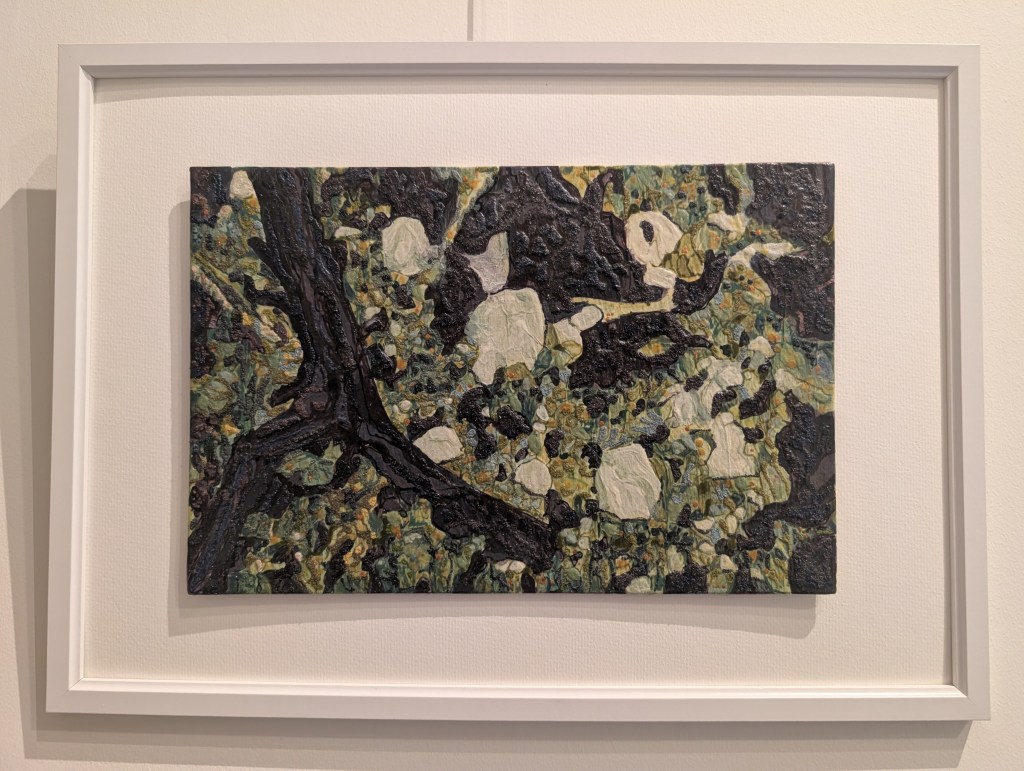
As the project has progressed, I’ve settled into experimenting with different combinations of a core set of ingredients:
- collage elements, torn/cut from abstract work painted or printed onto paper and tissue paper
- heavier, grainy textures built up using silver sand
- painted and drawn elements, using acrylics and compatible mediums with a variety of finishes
- additional colour applied using oil-based pencils
- shimmer and metallic lustre, using mica pigments.
I’m working with acrylics and using a six colour mixing system (two of each primary, one warm and one cool). I’ve been keeping track of colours I like to work with, and how to mix them, on a wall chart. Acrylics enable a good deal of creative freedom when combining different materials because their chemical makeup allows them to bind to almost anything and dry quickly.
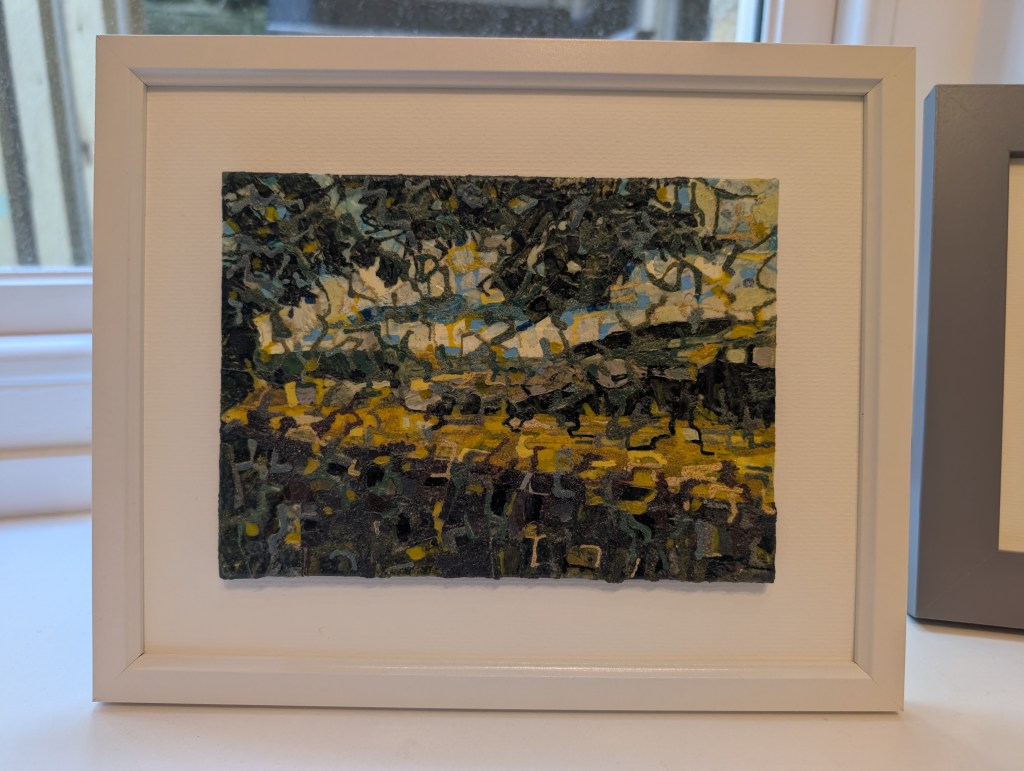
A number of people said they wanted to touch my work, which was good to know as I’m keen incorporate textures in ways that invite both a visual and tactile experience. Texture also adds dynamism, because its appearance changes depending on the angle of the room’s lighting.
I’m also paying attention to how what I make might respond to shifts in the light, which I’ve been exploring by introducing different combinations of matt and gloss mediums, as well as mica pigments. Unlike flat glitter, mica powder is made of tiny, translucent mineral flakes that reflect light naturally.
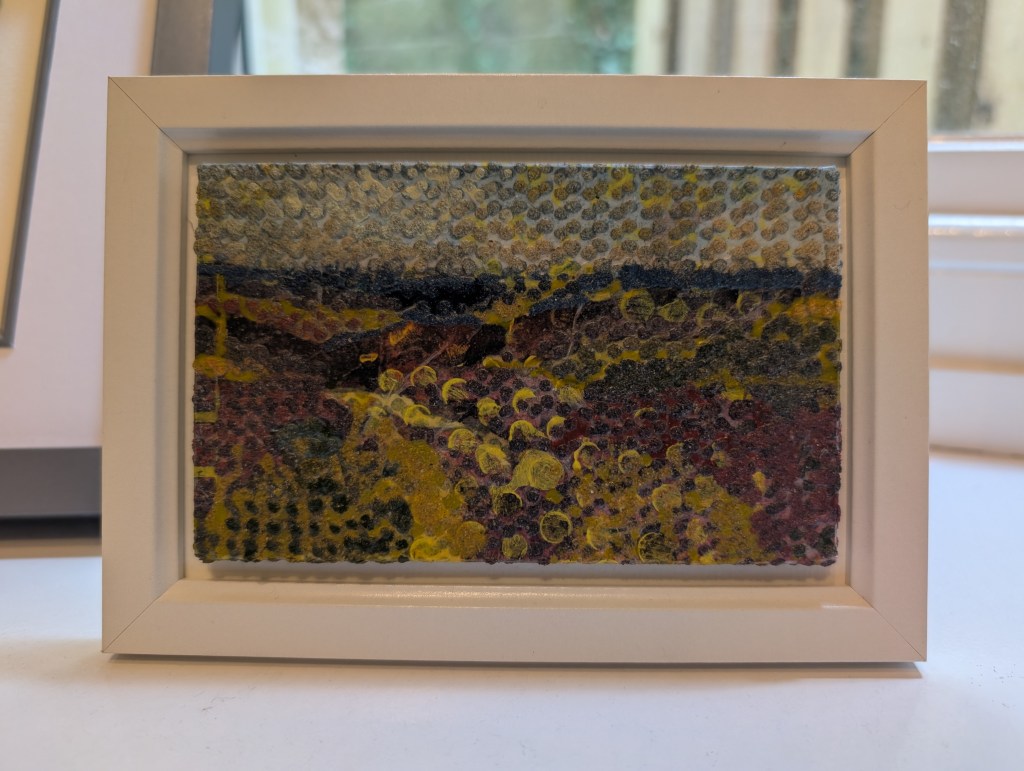
I’ve spent many happy hours testing out the characteristics and possibilities of my materials. For example, standard tissue paper loves to crinkle, wrinkle, and fold when it absorbs liquid. This creates organic micro-textures that can be accentuated with a dry brush of paint, or a wash of colour.
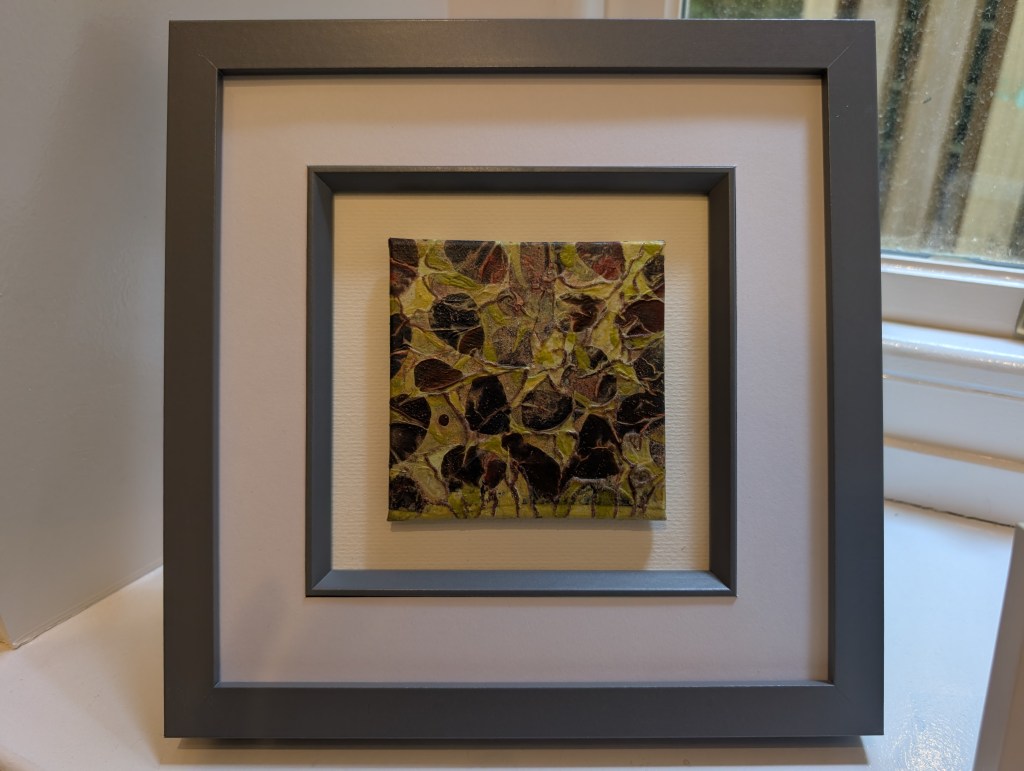
Tissue paper will also become semi-transparent when combined with an acrylic medium. This presents lots of interesting options for building up visual interest, making it possible to preserve layers of colour underneath while continuing to work on top.
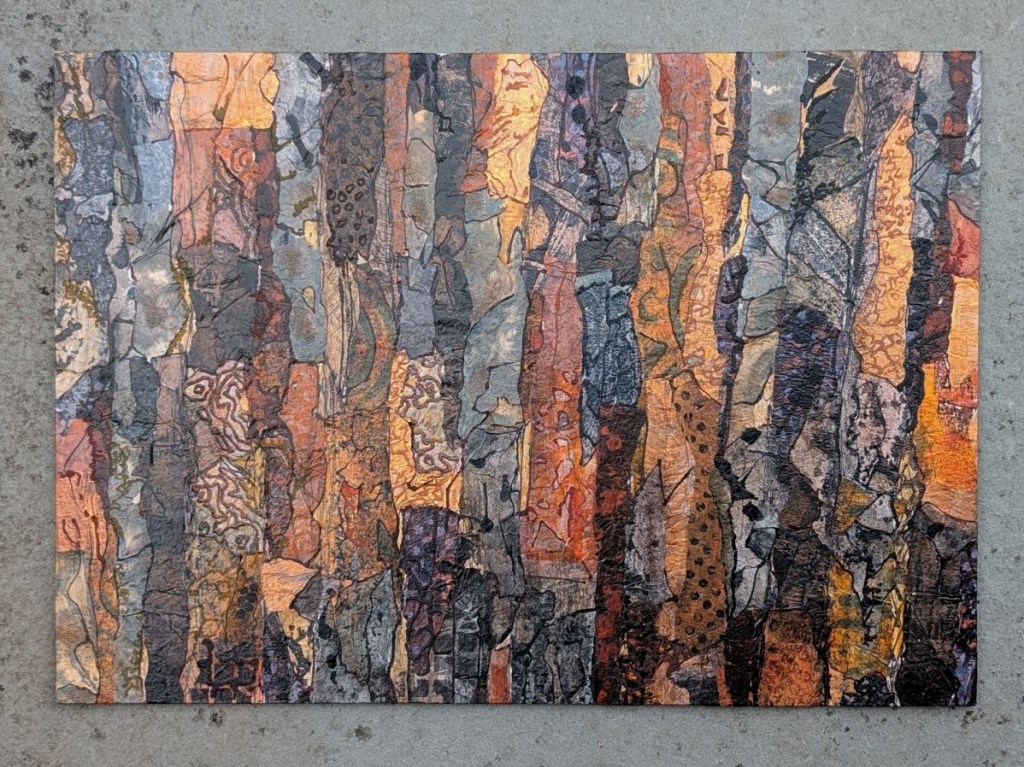
Through chatting with visitors about how I’ve achieved certain effects, I realised that collage elements have become much more fully integrated within surface of my work. For example, ‘Golden Hour’ began life as multiple prints on tissue. These were torn up and recombined with the intent that the final result should read as one cohesive, unified image.
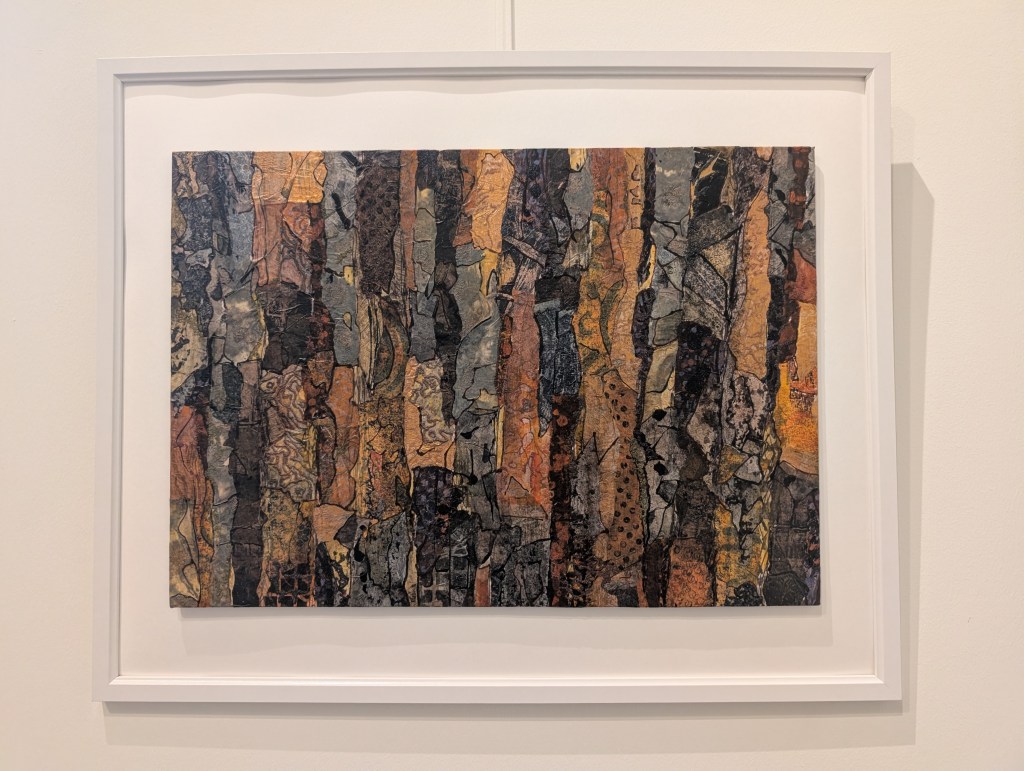
While it’s still early days, one of the key benefits of embarking on my ‘Clough to Causey’ project has been allowing my creative curiosity to take me on detours of discovery. I’ve experienced some delightful happy accidents through giving myself plenty of freedom to play.
It’s all too easy for me to get carried away and lose track of materials and processes, so I’ve learnt to keep one analytical eye open and make a note of new discoveries and techniques in a digital scrapbook. Working digitally enables me to quickly record images and notes without disturbing the flow.
